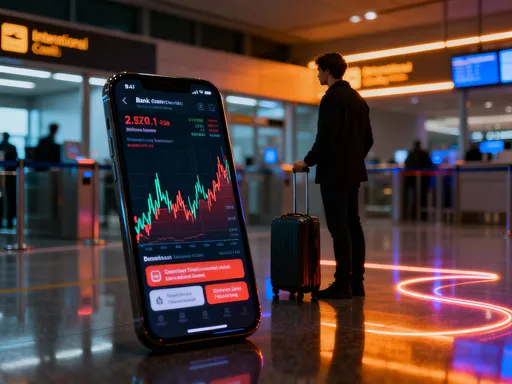
How I Protected My Money Working Abroad — A Beginner’s Real Talk
Moving overseas for work felt like winning the lottery—until I nearly lost everything. Between unfamiliar banks, sketchy "guaranteed return" schemes, and currency confusion, my savings were at risk. I made rookie mistakes, fell for too-good-to-be-true promises, and panicked more than once. But over time, I learned how to protect my income and grow it safely. This is what actually worked for me—no jargon, no hype, just real strategies for beginners navigating finance abroad. It wasn’t about making quick money; it was about not losing what I already had. And that shift in mindset made all the difference.
The Shock of Financial Culture Clash
Living abroad isn’t just about language or food—it’s a total financial reset. What felt normal back home didn’t apply overseas. In my home country, opening a bank account took one afternoon and required only ID and a small deposit. Here, it meant visiting three different branches, submitting utility bills I didn’t yet have, and waiting two weeks for approval. The local banking system operated on different assumptions—less digital, more paperwork, and a deep skepticism toward foreigners. Even something as simple as setting up direct deposit for my salary became a weeks-long negotiation with HR and payroll teams. I quickly realized that what seemed like basic financial hygiene at home was not universally recognized or available.
Tax rules added another layer of confusion. I assumed I’d only pay taxes where I earned income, but soon discovered that my home country still claimed partial responsibility for my earnings. The double-taxation treaty existed, but I had to file forms myself to benefit from it. No one at work explained this upfront. I learned the hard way when a surprise tax bill arrived six months in. That moment was a wake-up call: financial systems abroad weren’t designed with expats in mind. They were built for locals, and navigating them required research, patience, and sometimes professional help. I started reading government websites, attending expat financial webinars, and connecting with others in similar situations. Knowledge became my first line of defense.
Even everyday financial advice from coworkers turned out to be misleading. A colleague swore by a local investment product that “everyone” used, promising 8% annual returns with no risk. It sounded safe—until I dug deeper and found it wasn’t regulated by any recognized financial authority. Another friend recommended a “special” bank account for foreigners with higher interest rates, only to later learn it came with hidden fees that erased any gains. I began to see a pattern: what worked for locals didn’t always work for temporary residents. My status as a foreign worker changed the rules. I couldn’t rely on word-of-mouth. I had to verify every claim, read the fine print, and ask questions—even when it made me feel ignorant. The financial culture clash wasn’t just inconvenient; it was dangerous if ignored.
The biggest lesson? Trusting assumptions could cost me dearly. I had to unlearn habits and start fresh, treating every financial move as if I knew nothing. That humility saved me from bigger mistakes. I stopped assuming that systems were transparent, that advisors were qualified, or that products were safe just because they were popular. Instead, I built a checklist: Is this regulated? Can I access my money when I need it? Are the fees clearly disclosed? Does this align with my long-term goals? These questions became my foundation. Without this awareness, even small decisions—like opening an account or sending money home—carried hidden risks. Financial safety abroad began not with investing, but with understanding the rules of the game.
Why "Guaranteed Returns" Are Usually a Trap
Early on, I was desperate for stability. My income was steady, but my financial footing wasn’t. I wanted something that felt secure—something that promised consistent growth without volatility. That’s how I ended up in a meeting with a financial advisor who offered a “guaranteed return” investment with 7% annual yield. It sounded perfect. No market risk, no fluctuation, just steady growth. I was tired of uncertainty. I signed up, transferred the money, and felt a brief sense of relief. Then the problems started.
When I tried to withdraw a portion months later—just a small amount for an emergency—the process took weeks. The advisor cited “processing periods” and “contractual obligations.” I eventually got my money back, but only after escalating the issue and threatening to report the firm. Later, I discovered the product wasn’t registered with the national financial regulator. It operated in a gray zone, offering high returns by locking in investors’ funds and using complex structures that favored the provider, not the client. The so-called guarantee wasn’t backed by insurance or oversight. It was a promise—nothing more. And promises mean little when there’s no enforcement.
This experience taught me a hard truth: if something sounds too good to be true, it probably isn’t legal—or it’s hiding serious risk. True safety doesn’t come from promises; it comes from transparency, regulation, and diversification. A legitimate financial product will disclose risks, list fees, and be registered with a recognized authority. It won’t pressure you to act quickly or claim to be “exclusive.” I now know that guaranteed returns above market rates are almost always a red flag. Even government bonds, which are among the safest investments, don’t offer high yields without trade-offs like inflation risk or long lock-in periods.
Since then, I’ve adopted a simple rule: ignore anything that promises high returns with no risk. Instead, I focus on proven paths—like index funds, savings accounts with clear terms, and retirement plans backed by reputable institutions. These options don’t generate excitement, but they build wealth reliably over time. I also check regulatory databases before working with any financial provider. A quick search can reveal whether a company is licensed and whether it has a history of complaints. That small step has saved me from multiple questionable offers. The desire for guaranteed returns is understandable, especially when living far from home, but real financial security comes from discipline, not shortcuts.
Building a Safety-First Financial Base
After my early missteps, I shifted my focus from growth to protection. I realized that chasing returns was pointless if I couldn’t safeguard my core savings. So I built a financial base designed for stability, not speed. The first step was opening a reliable local bank account with international access. I chose a bank with a strong reputation, online banking in English, and partnerships with institutions in my home country. This made it easier to transfer money and avoid currency delays. I also confirmed that the bank was covered by deposit insurance—critical in case of failure. Not all countries offer this, and when they do, the limits vary. Knowing my money was protected up to a certain amount gave me peace of mind.
Next, I set up automatic transfers to a savings account back home. Every month, 30% of my salary moved to a high-yield savings account in my native currency. This served two purposes: it created a financial cushion in a familiar system, and it reduced my exposure to local economic fluctuations. If inflation spiked or the currency weakened, I still had savings in a more stable environment. I treated this account as untouchable—only for emergencies like medical issues, job loss, or urgent family needs. Automating the transfer ensured consistency, even when I was busy or distracted.
I also established an emergency fund in local currency, equivalent to six months of living expenses. This fund sat in a separate account, easily accessible but not linked to my daily spending card. It was my first line of defense against unexpected costs—car repairs, home emergencies, or sudden travel. I kept it in a liquid form, like a money market account, so I could access it quickly without penalties. This fund wasn’t meant to grow; it was meant to be safe and available. By separating it from my investment accounts, I avoided the temptation to dip into long-term savings during short-term crises.
Treating my finances like a fortress meant prioritizing strong foundations. I stopped trying to optimize every dollar for return and started asking whether each decision made me more secure. Stability became my benchmark. This base gave me peace of mind, knowing my core money was safe even if markets dipped or jobs changed. It also gave me flexibility. When opportunities arose—like a chance to invest in a solid ETF or contribute more to retirement—I could act without panic. Because I wasn’t one emergency away from financial stress, I could think clearly and make informed choices. That sense of control was worth more than any short-term gain.
Smart Money Movement Across Borders
Sending money home used to cost me a fortune. At first, I relied on my bank’s international wire service. The fees were high—sometimes $40 per transfer—and the exchange rate was always worse than the market rate. I lost hundreds of dollars in hidden costs over just a few months. I didn’t realize how much I was paying until I started tracking it. That’s when I began testing other options. I tried digital platforms like Wise (formerly TransferWise), PayPal, and Revolut, comparing their fees, exchange rates, and transfer speeds. The differences were staggering. Some services offered near-real-time transfers at a fraction of the bank’s cost, with transparent pricing and mid-market exchange rates.
I also learned the importance of timing. Exchange rates fluctuate daily, and sending money at the wrong time could mean losing 5% or more in value. I started monitoring currency trends, not to speculate, but to identify favorable windows. When the local currency strengthened against my home currency, I made larger transfers. When it weakened, I waited or sent smaller amounts. This strategy alone saved me thousands over two years. I didn’t need to predict the market—just avoid the worst moments. I also set up recurring transfers for fixed amounts, which helped smooth out volatility and build savings consistently.
Another key insight: not all transfer methods are equal for large sums. For smaller amounts, digital platforms work perfectly. But for bigger transfers—like moving a bonus or closing a local account—I switched to specialized services that offer better rates and personal support. These providers often assign a dedicated agent to help with documentation and timing, reducing errors and delays. I also verified that the recipient bank wouldn’t impose additional fees, which some do for incoming international wires. A transfer that cost $20 at my end could trigger a $30 charge on the other side if not structured properly.
Moving money efficiently isn’t about speed; it’s about strategy, timing, and avoiding unnecessary costs. I now treat every transfer as a financial decision, not just a routine task. I compare at least two options before sending, check the total cost (fees plus exchange margin), and confirm delivery times. I’ve also informed my family about expected arrival times to reduce anxiety when funds don’t appear immediately. These small improvements have added up fast, freeing up money that now goes toward savings and investments. What once felt like a necessary evil has become a manageable, even strategic, part of my financial routine.
Growing Wealth Without Gambling
Once my base was secure, I started investing—but cautiously. I had no interest in picking stocks or chasing crypto trends. My goal wasn’t to get rich quickly; it was to grow wealth steadily and safely over time. That’s why I turned to low-cost index funds and exchange-traded funds (ETFs). These products track broad market indices like the S&P 500 or global stock markets, offering instant diversification. Instead of betting on one company, I owned a slice of hundreds. Historically, these funds have delivered average annual returns of 7% to 10% over the long term. They aren’t flashy, but they’re reliable. And in finance, reliability beats excitement every time.
I also took full advantage of my employer’s retirement plan, especially the matching contribution. If my company offered to match 5% of my salary, I made sure to contribute at least that much. It was free money—essentially a guaranteed 100% return on that portion of my investment. I treated it as a non-negotiable part of my budget. Over time, those matched contributions compounded significantly. I chose funds within the plan that aligned with my risk tolerance—mostly a mix of stock and bond index funds—and kept fees low. High fees erode returns over time, sometimes by more than 1% per year. Even small differences add up across decades.
To stay consistent, I automated everything. My investment contributions happen automatically each month, right after payday. This removes emotion from the process. I don’t wait for the “right time” or try to time the market—because no one can do that reliably. Instead, I benefit from dollar-cost averaging: buying shares at different prices over time, which smooths out volatility. Whether the market is up or down, I keep investing. This discipline has outperformed every “hot tip” I’ve ever received. I’ve seen colleagues try to time entries, panic during dips, or chase trending sectors—only to buy high and sell low. My boring, steady approach has quietly built more value.
Compound growth isn’t magic—it’s patience. The earlier you start, even with small amounts, the more time your money has to grow. I’ve calculated that if I invest $300 a month with a 7% annual return, I could have over $500,000 in 40 years. That’s not a prediction, just a projection based on historical averages. The key is consistency. I don’t need to make bold moves or take big risks. By focusing on low-cost, diversified investments and automating contributions, I’ve created a system that works whether I’m paying attention or not. That’s the kind of growth I can trust.
Staying Alert: Fraud, Fees, and Hidden Traps
Abroad, financial predators often target foreigners. We’re seen as vulnerable—new to the system, unfamiliar with local norms, and sometimes desperate for guidance. I’ve seen colleagues lose money to fake financial advisors posing as certified planners, only to vanish after collecting fees. Others signed up for insurance-linked “investment” products that promised growth but delivered minimal returns after decades. These products often come with high commissions for the seller and steep early withdrawal penalties for the buyer. By the time investors realize they’ve been misled, it’s too late to recover their funds.
I’ve also learned to watch for hidden fees. Some banks advertise “free” accounts but charge for every transaction abroad, ATM use, or currency conversion. Others apply monthly maintenance fees that aren’t clearly disclosed during sign-up. Investment platforms may boast low trading fees but earn money through spreads—the difference between the buy and sell price. These costs are small individually but add up over time, silently eroding returns. I now audit my accounts monthly, reviewing every charge and questioning anything unclear. If a fee surprises me, I contact customer service and, if necessary, switch providers.
Another trap is overcomplication. Legitimate financial products are usually simple to understand. If an advisor can’t explain a product in plain language, that’s a red flag. I once attended a seminar about a “structured wealth solution” that used so much jargon I couldn’t tell what I’d actually be investing in. When I asked for a clear breakdown, the presenter became evasive. I walked away—and later found out the product had been flagged by regulators for misleading marketing. I now follow a simple rule: if I don’t understand it, I don’t buy it. Complexity is often used to obscure risk.
Awareness is my best defense. I verify credentials before working with any financial professional, checking whether they’re licensed and in good standing with local authorities. I read reviews, ask for references, and consult expat forums. A little skepticism goes a long way in protecting what I’ve built. I also keep my documents organized and my passwords secure. Financial safety isn’t just about smart investments—it’s about vigilance, clarity, and continuous learning.
Lessons That Changed My Financial Mindset
Looking back, my biggest wins weren’t big returns—they were avoiding disasters. The money I didn’t lose by skipping risky schemes, the fees I saved by switching providers, the stress I avoided by having an emergency fund—these were my real victories. Patience, discipline, and education mattered more than luck. I learned that money isn’t something to gamble with; it’s a tool to build security, freedom, and opportunity. That shift in mindset changed everything.
I used to think financial success meant making bold moves. Now I know it’s about making consistent, informed choices. I treat every decision as part of a long-term strategy, not a one-time event. I prioritize safety, transparency, and simplicity. I don’t expect perfection—mistakes still happen—but I’ve built systems that catch errors early and minimize damage. I review my finances quarterly, adjust my budget as needed, and stay curious about new tools and regulations.
Most importantly, I’ve started helping other expats avoid my early mistakes. I share what I’ve learned in online groups, answer questions from new arrivals, and encourage others to ask for help. Financial confidence isn’t about knowing everything; it’s about knowing where to start and when to pause. Staying safe while working overseas isn’t about being rich—it’s about being smart, steady, and informed. It’s about building a life where money serves you, not stresses you. And that’s a goal worth working toward, one careful step at a time.