How Pilates Transformed My Daily Life — A Real Long-Term Health Journey
For years, I chased quick fixes—intense workouts, trendy diets, anything promising fast results. Nothing stuck. Then I tried Pilates, almost by accident. Not for weight loss or six-pack dreams, but simply to move better. What surprised me? It quietly became my lifelong health strategy. Over months and years, small changes added up: less back pain, better posture, deeper breathing. This isn’t about perfection—it’s about consistency, awareness, and showing up for yourself. Here’s how Pilates became more than exercise—it became my way of managing health, day after day.
The Breaking Point: Why I Finally Chose Pilates
Like many women in their 30s and beyond, I found myself caught in a cycle of frustration. I wanted to feel strong and energized, but my body often felt stiff, tired, and uncooperative. Mornings began with a sore lower back, and by midday, my shoulders were tense from hours at the desk. I had tried various fitness routines—high-intensity interval training, running, even short-lived gym memberships—but none offered lasting relief. Each program felt too intense at first, then too repetitive, and eventually, I’d stop altogether. The pattern repeated: start with motivation, lose momentum, feel discouraged.
My turning point wasn’t dramatic. It came during a conversation with a friend who had recovered from a minor back injury. She mentioned how Pilates had helped her regain strength without strain. At first, I dismissed it—wasn’t Pilates just gentle stretching for dancers or older adults? But her description of feeling “more connected” to her body intrigued me. With low expectations, I signed up for a beginner’s class at a local studio. I almost didn’t go the first time, convincing myself I was too busy or not “flexible enough.” But something urged me to show up—and that single decision began to shift my relationship with movement.
Within just a few sessions, subtle changes emerged. I noticed I was sleeping more deeply. My morning stiffness lessened. I caught myself standing taller without thinking about it. These weren’t dramatic transformations, but they were real. For the first time, exercise didn’t feel like a battle with my body—it felt like a conversation. I wasn’t pushing to burn calories or sculpt muscles; I was learning to move with more ease and control. That shift in mindset—from punishment to partnership—was the first true sign that this could be different.
Pilates Beyond the Mat: What It Really Is (And Isn’t)
One of the most common misunderstandings about Pilates is that it’s simply a form of stretching or core strengthening. While it does improve flexibility and engage the deep abdominal muscles, it is much more than that. Developed by Joseph Pilates in the early 20th century, the method is a comprehensive system of mind-body movement designed to build strength, improve alignment, and enhance physical awareness. At its core, Pilates is built on six key principles: concentration, control, centering, precision, breath, and flow. These aren’t just abstract ideas—they guide every movement, making each exercise intentional and purposeful.
Unlike high-impact workouts that rely on momentum and repetition, Pilates emphasizes slow, controlled motions that engage the entire body in a coordinated way. Every movement begins with breath and originates from the “powerhouse”—the deep core muscles around the abdomen, lower back, and pelvis. This focus on the center helps stabilize the spine and supports better posture over time. Because the exercises are low-impact and performed with attention to form, they place minimal stress on the joints, making Pilates a sustainable practice for people of all ages and fitness levels.
It’s also important to distinguish Pilates from yoga, though both value breath and body awareness. Yoga often incorporates meditation, spiritual elements, and static poses held for duration. Pilates, by contrast, is primarily movement-based, with a strong emphasis on physical rehabilitation, alignment, and functional strength. While yoga may focus on stillness and inner reflection, Pilates trains the body to move efficiently in daily life—whether you’re lifting groceries, climbing stairs, or sitting at a desk for hours.
Another key difference lies in its adaptability. Pilates can be practiced on a mat or with specialized equipment like the reformer, Cadillac, or stability chair, allowing for progressive challenge without increasing impact. This makes it uniquely suited for long-term health management. Rather than burning out after a few weeks, as often happens with intense fitness trends, Pilates invites gradual progress. It’s not about how fast you move or how many reps you complete—it’s about how well you perform each movement. That focus on quality over quantity is what makes it both safe and effective over time.
The Long-Term Payoff: What Actually Changes Over Time
After six months of consistent Pilates practice—initially two classes per week, later complemented by short home sessions—I began to notice deeper, more lasting changes. The chronic lower back discomfort that had plagued me for years diminished significantly. I no longer needed to adjust my chair constantly or avoid long car rides. My posture improved to the point where friends began to comment: “You’re standing differently.” I realized I was no longer slouching at my desk or leaning on one hip when I stood. These weren’t cosmetic changes—they reflected real improvements in spinal alignment and muscular balance.
Beyond the physical, I experienced shifts in how I felt mentally and emotionally. The focus required during Pilates sessions—on breath, on alignment, on control—created a kind of moving meditation. I found that my ability to concentrate during the day improved. Stress didn’t disappear, but I felt better equipped to manage it. Instead of reacting with tension, I could pause, take a breath, and reset. This growing sense of body awareness began to influence other areas of my life. I became more mindful of how I carried myself, how I lifted heavy objects, even how I breathed during moments of frustration.
These benefits are not unique to me. Many long-term practitioners report similar outcomes. A woman in her 50s, recovering from a minor hip surgery, shared how Pilates helped her regain mobility without pain. An office worker in his 40s described how regular sessions reduced his neck and shoulder tension caused by prolonged computer use. These are not isolated anecdotes—research has shown that Pilates can support musculoskeletal health, particularly in improving balance, flexibility, and core endurance. While individual results vary, the consistent thread is improved function and quality of movement over time.
What stands out most is how these changes accumulate quietly. There’s no dramatic weight loss or visible muscle gain—instead, the rewards are measured in ease: walking without discomfort, bending down without fear, standing up without effort. For many women managing the physical demands of work, parenting, and aging, this kind of functional improvement is more valuable than any number on a scale. Pilates doesn’t promise a transformed body in 30 days. It offers something more enduring: a stronger, more resilient body that can meet the demands of daily life with greater confidence and less strain.
Making It Stick: Building a Sustainable Routine
One of the greatest challenges in any fitness journey is consistency. Motivation fades, schedules change, and life gets busy. What helped me stay with Pilates wasn’t intensity or dramatic results—it was simplicity. I started small: two 20-minute mat sessions per week, one in a studio and one at home. I didn’t aim for perfection. Some days, I skipped a session. Others, I felt distracted or stiff. But I learned that showing up—even imperfectly—was more important than pushing hard.
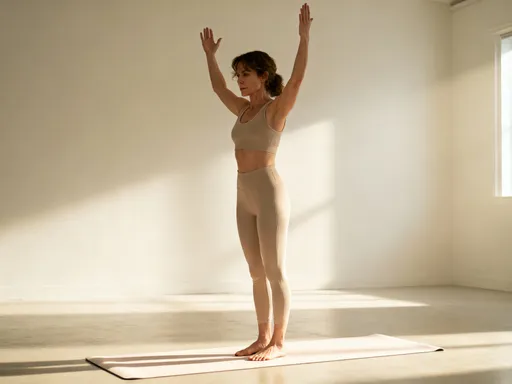
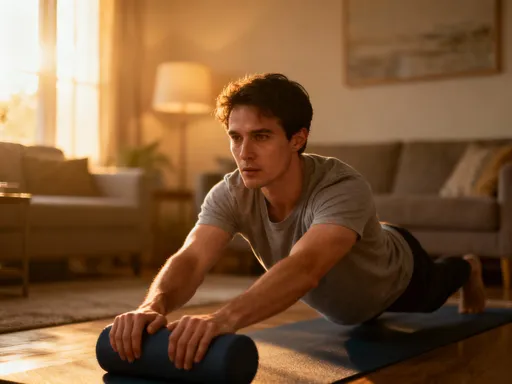
Over time, I built a routine that fit my life. I used online videos from certified instructors to guide my home practice. These weren’t flashy or fast-paced; they focused on alignment and breath, just like the studio classes. I also invested in simple tools like a resistance band and a foam roller, which added variety without complexity. The key was to keep it accessible. I didn’t need special clothing or a full hour—just a quiet space and the willingness to move with attention.
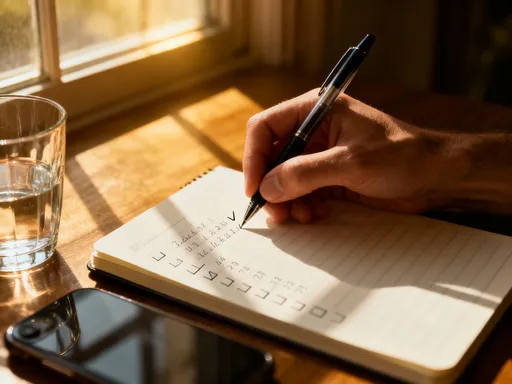
There were moments of plateau, when progress felt stalled. I didn’t suddenly stand taller overnight, and my core strength improved gradually. To stay engaged, I mixed formats—alternating mat work with occasional reformer sessions when available. I also began tracking non-scale victories: how long I could hold a plank with proper form, how easily I could get up from the floor, how much better I slept. These small markers of progress kept me motivated in a way that appearance-based goals never had.
Another crucial factor was patience. Pilates is not a quick fix. It rewards regular, mindful practice over time. I stopped comparing myself to others in class or to images online. Instead, I focused on how my body felt—whether I was breathing more deeply, moving with more control, or standing with less effort. This internal focus made the practice more personal and sustainable. It wasn’t about keeping up; it was about showing up for myself, day after day.
Integrating Pilates Into Daily Health Management
As my Pilates practice deepened, I began to see its principles extending beyond the mat. The awareness I developed during sessions—of alignment, breath, and movement efficiency—started influencing how I moved throughout the day. I caught myself adjusting my posture at my desk, sitting with a straighter spine, and using my legs instead of my back when lifting heavy bags. These small shifts, rooted in Pilates training, reduced strain on my body and prevented the kind of repetitive stress that leads to long-term discomfort.
The breathwork I practiced during Pilates also became a tool for daily well-being. Learning to inhale deeply into the ribs and exhale fully helped me manage moments of stress or fatigue. Instead of holding my breath during tense phone calls or shallow breathing while working, I could reset with a few conscious breaths. This simple act improved not only my physical comfort but also my mental clarity. I felt calmer, more centered, and better able to make thoughtful choices—about work, rest, and even food.
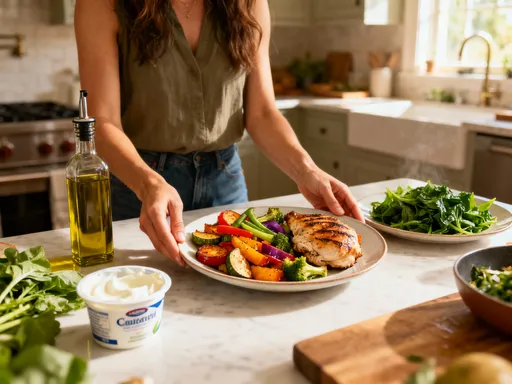
Interestingly, my relationship with eating also shifted. Not because Pilates is a weight-loss program—because it’s not—but because increased body awareness led to more intuitive decisions. I began to notice how certain foods affected my energy and digestion. I didn’t follow a strict diet, but I naturally gravitated toward nourishing meals that supported my movement practice. Similarly, I became more attuned to my need for rest. On days when my body felt fatigued, I chose gentle movement or extra sleep instead of pushing through. Pilates taught me to listen—to honor what my body was telling me, rather than override it.
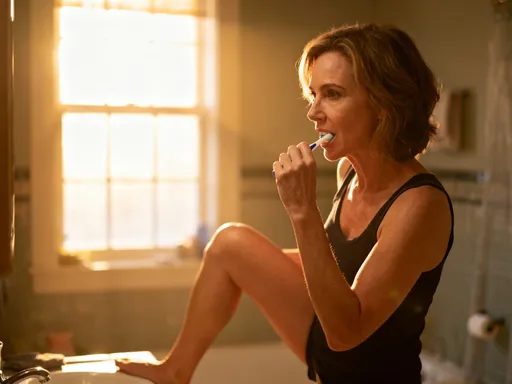
Over time, I stopped thinking of Pilates as “exercise” and began to see it as preventive self-care. Like brushing my teeth or getting enough sleep, it became a non-negotiable part of my health routine. It wasn’t something I did to fix a problem; it was something I did to maintain balance, strength, and resilience. In a world that often prioritizes speed and intensity, Pilates offered a different path—one of sustainability, awareness, and long-term well-being.
Who Can Benefit—and Who Should Proceed with Care
One of the most powerful aspects of Pilates is its accessibility. It can be adapted for nearly any age, fitness level, or physical condition. Whether you’re a new mother rebuilding core strength, an older adult improving balance, or someone recovering from an injury, Pilates offers a safe and effective way to move. Its low-impact nature means it doesn’t require jumping, running, or heavy lifting, making it ideal for those with joint concerns or limited mobility.
That said, proper guidance is essential, especially for individuals with pre-existing conditions such as chronic back pain, osteoporosis, or joint instability. While Pilates can be highly beneficial in these cases, certain movements may need modification. Working with a certified Pilates instructor—particularly one trained in rehabilitation or working with special populations—can ensure that the practice is safe and effective. They can assess your movement patterns, correct alignment, and tailor exercises to your needs.
It’s also wise to consult a healthcare provider before beginning any new movement program, especially if you have a medical history that affects mobility or stability. This is not to discourage practice, but to support informed choices. Pilates is not a substitute for medical treatment, but it can be a valuable complement when done correctly. The goal is not to push through pain or force the body into positions it’s not ready for. True progress comes from listening, adjusting, and respecting your body’s limits.
Safety and proper form are non-negotiable. Unlike some fitness trends that glorify intensity, Pilates emphasizes precision and control. A well-taught session should never leave you sore or injured. If a movement causes pain or discomfort, it should be stopped and reviewed. The practice is about building strength with intelligence, not endurance through strain. When approached with care, Pilates becomes not just a workout, but a lifelong tool for health and mobility.
A Practice for Life: Why I Keep Coming Back
Looking back, I realize that Pilates didn’t change my life in a single moment—it changed it over time, through small, consistent choices. It wasn’t a fix, but a commitment. I keep coming back not because I’ve achieved some ideal state of fitness, but because the practice continues to meet me where I am. Some days, it’s about rebuilding strength after illness. Other days, it’s about recentering after a stressful week. It grows with me, adapts to my needs, and supports my body through the natural changes of aging.
The progress I’ve made isn’t measured in inches lost or clothes sizes changed. It’s measured in how I move through the world—with more ease, less pain, and greater confidence. I can play with my children without back strain. I can travel long distances and still feel energized. I can sit through a meeting and stand up without stiffness. These are the quiet victories that matter most.
To anyone considering Pilates, I offer this: start without pressure. You don’t need to be flexible, strong, or experienced. You just need curiosity and the willingness to begin. Try a beginner’s class, follow a gentle video, or simply practice mindful breathing at home. Let go of the need for immediate results. Trust that small efforts, repeated over time, create lasting change. Pilates isn’t about perfection—it’s about presence.
In a world full of noise and urgency, Pilates has become my anchor. It reminds me that health isn’t something I achieve—it’s something I practice. Every breath, every movement, every moment of awareness is a step toward a stronger, more balanced life. And that, more than any quick fix, is a promise worth keeping.