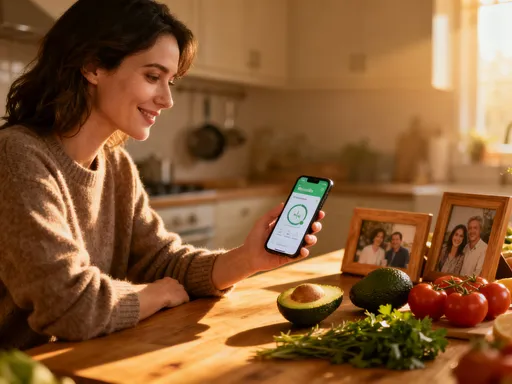
More than counting calories: How smart tools helped me actually stick to my health goals
You know that feeling when you’re trying to eat better, but by 3 p.m., hunger hits and willpower crumbles? I’ve been there—standing in front of the fridge, wondering why another day derailed. It wasn’t lack of motivation; it was lack of support. Then I discovered how simple tech tools could quietly guide my choices, not judge them. They didn’t just track meals—they got my routine, my cravings, even my busy mornings. This isn’t about perfection. It’s about progress that fits real life.
The Breaking Point: When Good Intentions Aren’t Enough
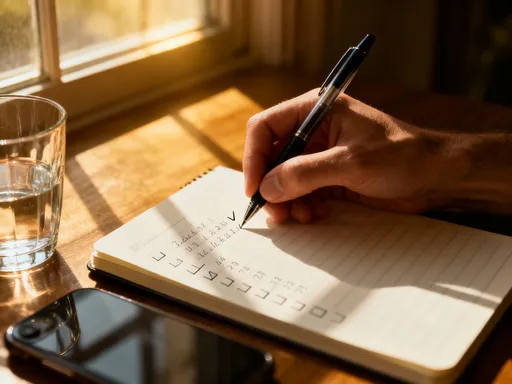
Let’s be honest—most of us start a new health plan with real excitement. I remember writing down my goals on a crisp Monday morning: “Eat more vegetables,” “Cut back on sugar,” “Drink eight glasses of water.” I even bought a cute journal to track it all. But by Wednesday, I was eating cookies in the car while waiting to pick up my daughter from dance class, wondering how I’d already failed. Sound familiar? I wasn’t lazy. I wasn’t weak. I was just… overwhelmed. Between school drop-offs, work emails, and trying to get dinner on the table before someone started yelling, who had time to plan balanced meals or remember to drink water?
The truth is, willpower is like a muscle—it gets tired. And when you’re juggling a million things, that muscle gives out fast. I used to think I needed more discipline, but what I really needed was a system. Something that didn’t rely on me being perfect every single day. I’d set these big, sweeping goals and expect myself to magically stick to them without any real tools. No wonder I kept falling off track. The turning point came when I stopped blaming myself and started asking, “What could actually help me?” That’s when I began to look beyond motivation and toward support—real, practical help that fit into the chaos of my real life.
It wasn’t until I admitted that good intentions alone weren’t enough that I opened the door to change. I realized I didn’t need another diet plan. I needed something that could meet me where I was—tired, busy, and trying my best. And that’s exactly what I found, not in a fancy gym or a restrictive meal plan, but in the device I already carried in my pocket.
Enter the Quiet Helper: How Goal-Tracking Apps Changed the Game
I’ll admit, I was skeptical at first. I’d downloaded health apps before—ones that counted calories, logged steps, and gave me red X’s when I didn’t meet my goals. They made me feel worse, not better. But this time, I looked for something different. I wanted an app that didn’t scream at me when I slipped up, but instead whispered, “Hey, remember what you said you wanted?” That’s how I found a simple goal-tracking app that felt more like a kind friend than a drill sergeant.
Instead of focusing on numbers, it asked me to set small, meaningful intentions each day. Things like “Eat a piece of fruit with breakfast” or “Take three deep breaths before lunch.” I could check them off with a tap, and if I missed one? No guilt. No penalty. Just a gentle reminder the next day: “Want to try again?” What surprised me was how much those tiny reminders helped. On a morning when I was rushing and about to skip breakfast, a soft chime reminded me of my goal to “eat something within an hour of waking.” So I grabbed a banana and a handful of almonds. It wasn’t gourmet, but it was something. And that small win made me feel like I was still on track.
The real magic wasn’t in the tracking—it was in the consistency. Over time, these little nudges helped me stay connected to my goals, even on hectic days. I wasn’t chasing perfection anymore. I was building awareness. And that awareness made it easier to make better choices, not because I was forcing myself, but because I remembered what mattered to me. The app didn’t change my life overnight, but it gave me a way to show up for myself, day after day, in a way that felt kind and doable.
Meals Made Manageable: Diet Tools That Fit My Real Schedule
One of my biggest struggles used to be dinner. By the time 5 p.m. rolled around, I’d be standing in front of the fridge, staring blankly, thinking, “What can I make that’s healthy, quick, and everyone will actually eat?” I’d end up ordering pizza—again. I knew I needed a better plan, but I didn’t have time to scroll through recipes or make elaborate meal prep on Sunday nights. That’s when I discovered a meal-planning app that actually worked for my real life.
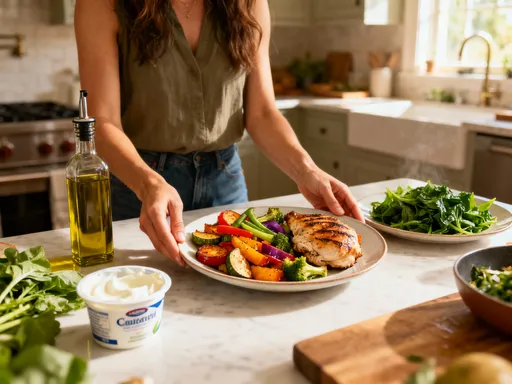
This wasn’t one of those apps that gave me fancy, 12-ingredient recipes requiring a specialty store. Instead, it asked what I already had in my pantry and fridge, how much time I had, and what my family liked. Then it suggested realistic meals—like a lentil soup using canned beans and frozen veggies, or a stir-fry with chicken and whatever vegetables were about to go bad. Even better, it created a shopping list based on what I’d chosen, so I wasn’t wandering the grocery store wondering what to buy.
But the coolest part? The app started to learn my patterns. It noticed that on Tuesdays, I was always short on time because of my son’s soccer practice. So it began suggesting 20-minute meals for that day. It also knew I liked to double recipes for leftovers, so it adjusted portion sizes automatically. When I told it I was going out one night, it shifted the meal plan so nothing would go to waste. It felt like having a personal assistant who actually understood my life.
Suddenly, healthy eating didn’t feel like a chore. I wasn’t spending hours cooking or stressing about nutrition labels. I was making simple, balanced meals that fit my schedule. And because the meals were realistic, I actually stuck with them. My family didn’t even realize we were “eating healthier”—they just thought dinner tasted good. That, to me, was a win.
Seeing Patterns, Not Just Numbers: What My Data Revealed About Me
At first, I thought tracking my meals was just about accountability. But over time, I started to notice something unexpected: patterns. I began to see connections between what I ate and how I felt. For example, I realized that on days when I skipped breakfast, I was more likely to crave sugar by mid-afternoon. Or that when I drank enough water, I had more energy during my evening walk with the dog. The app didn’t just log food—it asked how I felt each day: tired, stressed, focused, calm. And slowly, a picture started to emerge.
One week, I saw a clear trend: every Friday, my energy dipped hard around 3 p.m. I looked back at my logs and noticed I hadn’t eaten lunch until 2:30, and I’d skipped breakfast because I was late for a meeting. The data didn’t shame me—it helped me understand. So the next Friday, I packed a breakfast bar and ate it in the car. I made sure to eat lunch by 12:30. And guess what? That afternoon crash never came. It was such a small change, but it made a big difference.
What I loved was that the tech didn’t tell me what to do. It simply showed me what was already happening. And that made it easier to make smarter choices—not because I was following a rule, but because I could see the cause and effect in my own life. It turned confusion into clarity. I wasn’t guessing anymore. I had real insight into my habits, and that made me feel more in control. It was like having a mirror for my daily routine, one that reflected not just what I ate, but how I lived.
Family Wins Too: How Tech Brought Us Healthier Habits Together
Here’s something I didn’t expect: using these tools didn’t make me feel isolated in my health journey. It actually brought my family closer. I started sharing my meal plan with my husband and kids. We turned “meatless Monday” into a little game—everyone got to vote on the recipe, and the app helped us find one that was both fun and nutritious. My daughter loved picking out the ingredients at the store, and my son proudly announced he “helped make dinner” when we made black bean tacos.
We also used a shared water-tracking feature. We’d challenge each other to hit our goals, and when someone did, we’d celebrate with a little cheer at dinner. It wasn’t about competition—it was about connection. Even my husband, who used to roll his eyes at “all this health stuff,” started joining in. He liked that the app didn’t make him feel judged. He could log his coffee and sandwich, and it just said, “Nice job staying hydrated today.” Simple. Positive. Encouraging.
What surprised me most was how these small moments added up. We weren’t just eating better—we were talking more, laughing more, and feeling like a team. The tools gave us a shared language for health, one that felt light and fun instead of strict and serious. It reminded me that taking care of myself wasn’t selfish—it was a gift I could share with the people I love.
Beyond the Plate: How Small Wins Built Bigger Confidence
Here’s the thing I didn’t see coming: the more I used these tools, the more confident I felt in other areas of my life. It started with food, but it didn’t end there. Logging my meals consistently made me feel capable. And that sense of capability spilled over. I started organizing my work calendar better. I began setting small goals for sleep and movement. I even found myself saying “no” to things that drained my energy, because I realized how much I valued feeling balanced.
It wasn’t that the apps were doing the work for me. It was that they gave me proof—small, daily proof—that I could follow through. Every time I met a tiny goal, like drinking my morning water or eating a vegetable with dinner, I was building trust in myself. And that trust grew. I stopped seeing myself as someone who “always fails” and started seeing myself as someone who shows up, even in small ways.
This shift changed everything. I wasn’t waiting for a dramatic transformation. I was learning to believe in the process. And that belief made it easier to keep going, even on hard days. I wasn’t perfect, but I was present. And that presence—showing up for myself, day after day—was the real victory.
Peace Over Perfection: Why I Keep These Tools in My Life
I used to think health was about big changes—strict diets, intense workouts, willpower like steel. But what I’ve learned is that real, lasting change comes from peace, not pressure. These tech tools didn’t transform me overnight. They didn’t promise a six-pack or a 20-pound weight loss. What they gave me was something quieter, but far more valuable: support. They helped me stay connected to my goals without guilt. They made healthy choices feel possible, even on the busiest days. And they reminded me, gently and consistently, that I matter.
Today, I don’t use these apps because I’m trying to fix myself. I use them because they help me live well. They’re not a temporary fix—they’re part of my routine, like brushing my teeth or setting my alarm. They don’t demand perfection. They celebrate effort. And that makes all the difference.
If you’re tired of starting over every Monday, only to fall off by Wednesday, I want you to know there’s another way. It’s not about being stronger or more disciplined. It’s about being kinder, more supported, and more in tune with your own life. The right tools won’t do the work for you, but they can walk beside you—quietly, gently, and without judgment. And sometimes, that’s exactly what we need to keep going. Because real health isn’t about perfection. It’s about progress. It’s about peace. And it’s absolutely within your reach.