Why I Chose TCM Adjustment for My Recovery Journey
For months, I struggled with low energy and slow recovery after illness—until I explored traditional Chinese medicine (TCM) adjustment. Instead of quick fixes, I focused on balance: qi flow, organ harmony, and natural restoration. Scientific studies increasingly support TCM’s role in rehabilitation, from reducing inflammation to improving sleep. This is not about cure, but realignment. What I discovered wasn’t magic, but method—a gentle, evidence-informed path to feeling like myself again.
The Hidden Struggle: When Recovery Takes Longer Than Expected
Many people assume that once an illness passes, energy and vitality return naturally. Yet for countless individuals, especially women between the ages of 30 and 55 managing households, careers, and caregiving, full recovery can feel just out of reach. Lingering fatigue, disrupted sleep, frequent colds, and digestive discomfort are common but often dismissed as 'just part of getting older' or 'the price of being busy.' These symptoms, however, signal something deeper: a body struggling to regain equilibrium after stress or sickness. This gap between illness and full restoration is known in integrative health circles as the 'recovery gap'—a phase where conventional medicine may offer limited support.
Standard medical care often prioritizes treating acute symptoms over restoring long-term function. Medications may reduce fever or ease pain, but they don’t always address why the body remains sluggish or why resilience seems diminished. Blood tests might come back normal, yet the person still feels 'off.' This disconnect can be frustrating, even isolating. Many women in this stage of life report feeling overlooked by the healthcare system when their complaints don’t fit into clear diagnostic categories. As a result, more are turning to complementary approaches—not to replace medicine, but to fill the spaces it sometimes leaves open.
Traditional Chinese Medicine (TCM) offers a framework that acknowledges the subtleties of post-illness fatigue. Rather than viewing the body as a collection of isolated systems, TCM sees it as an interconnected network where imbalance in one area affects the whole. This perspective resonates with women who sense that their fatigue isn’t just physical, but tied to emotional strain, disrupted routines, or chronic stress. The idea that recovery involves more than rest—that it requires active re-balancing—becomes a turning point for many seeking deeper healing.
What Is TCM Adjustment? Rewiring the Body’s Balance System
TCM adjustment refers to a personalized, multi-modal approach aimed at restoring the body’s natural harmony. It is not a single treatment but a coordinated set of practices—including acupuncture, herbal regulation, dietary guidance, and lifestyle refinement—designed to support the body’s innate ability to heal. At its core, TCM operates on principles such as qi (vital energy), yin-yang balance, and the functional relationships between organ systems. These concepts may sound abstract, but they align closely with modern understandings of physiology, nervous system regulation, and metabolic function.
Qi, often described as the body’s life force, flows through pathways known as meridians. When qi moves freely, the body functions optimally. When it becomes blocked or depleted—due to illness, stress, or poor lifestyle habits—symptoms like fatigue, pain, or insomnia may arise. Acupuncture, one of the most studied TCM practices, works by stimulating specific points along these meridians to encourage smoother qi flow. Research has shown that acupuncture can influence the autonomic nervous system, reducing sympathetic ('fight-or-flight') dominance and enhancing parasympathetic ('rest-and-digest') activity, which supports recovery.
Yin and yang represent complementary forces—cooling and warming, rest and activity, storage and expenditure. In TCM, illness or prolonged stress can tip this balance. For example, chronic fatigue may be seen as a depletion of yin (the nourishing, calming aspect), while anxiety or insomnia might reflect excess yang (overactivity). The goal of TCM adjustment is not to eliminate one force but to restore proportion. This mirrors modern concepts of homeostasis, where the body maintains internal stability despite external challenges. By addressing imbalances before they become clinical conditions, TCM functions as a preventive and restorative practice.
Organ systems in TCM are not identical to anatomical organs but represent functional networks. The 'Spleen' in TCM, for instance, governs digestion and energy production, while the 'Kidneys' are linked to vitality and long-term resilience. These systems interact in predictable ways, and TCM practitioners assess patterns of disharmony through observation, pulse reading, and patient history. This holistic evaluation allows for tailored interventions that go beyond symptom suppression, aiming instead to strengthen the body’s foundational health.
The Science Behind the Shift: How TCM Supports Rehabilitation
While TCM has been practiced for thousands of years, modern science is increasingly validating its mechanisms and benefits. A growing body of clinical research supports the use of acupuncture in reducing inflammation, modulating pain, and improving recovery outcomes. For example, studies published in journals such as *Evidence-Based Complementary and Alternative Medicine* have demonstrated that acupuncture can lower levels of pro-inflammatory cytokines, which are often elevated after illness or surgery. This anti-inflammatory effect may explain why many patients report faster healing and reduced fatigue when TCM is integrated into their recovery plan.
Neuroimaging studies have further revealed that acupuncture influences brain regions involved in pain processing, emotional regulation, and autonomic control. Functional MRI scans show changes in activity in the hypothalamus and limbic system following treatment, suggesting that acupuncture helps regulate stress responses. This is particularly relevant for post-illness recovery, where chronic stress can impair immune function and delay healing. By calming the nervous system, TCM creates a physiological environment more conducive to repair and regeneration.
Research on patients recovering from surgery or chronic fatigue syndrome has also shown promising results. A 2021 systematic review found that integrative protocols including acupuncture and herbal medicine were associated with improved energy levels, better sleep quality, and enhanced immune markers compared to standard care alone. Another study tracking post-viral fatigue patients noted that those receiving TCM support returned to daily activities an average of two weeks earlier than those relying solely on rest and medication. These findings underscore the potential of TCM not as an alternative, but as a complementary layer in comprehensive rehabilitation.
Herbal medicine, another pillar of TCM adjustment, also has scientific backing. Adaptogenic herbs like Astragalus and Codonopsis are studied for their ability to enhance immune function and reduce oxidative stress. These herbs do not act as stimulants but help the body adapt to physical and emotional demands. When used under professional guidance, they can support recovery without overburdening the system. The synergy between acupuncture, herbs, and lifestyle changes creates a multi-targeted approach that addresses the complexity of post-illness fatigue in a way that single-modality treatments often cannot.
Realignment in Action: Key Methods That Made a Difference
The strength of TCM lies in its personalization. No two recovery journeys are identical, and TCM practitioners tailor treatments based on individual patterns of imbalance. One common starting point is auricular acupuncture—the application of tiny needles or pressure seeds to specific points on the ear. These points correspond to different organs and functions, and stimulation can have a regulatory effect on sleep, appetite, and mood. Many women find this method especially accessible, as it is minimally invasive and can be maintained between sessions with press seeds taped to the ear.
Moxibustion, the gentle burning of mugwort near specific acupuncture points, is another technique frequently used to warm and invigorate qi. It is particularly helpful for those experiencing coldness, low energy, or digestive sluggishness—symptoms often linked to 'yang deficiency' in TCM. The warmth from moxa penetrates deeply, promoting circulation and metabolic activity. While the practice may seem unusual at first, many patients describe a comforting sensation and notice improved digestion and stamina after regular sessions.
Herbal formulas are prescribed based on detailed assessment. For example, a woman with post-illness fatigue, poor appetite, and loose stools might receive a formula like *Shen Ling Bai Zhu San*, which strengthens the Spleen and improves nutrient absorption. Another with insomnia, dry eyes, and irritability might be given *Tian Wang Bu Xin Dan* to nourish heart yin and calm the spirit. These formulas are typically taken as decoctions or granules and adjusted over time as symptoms change. The key is not a one-size-fits-all solution, but a dynamic plan that evolves with the patient’s needs.
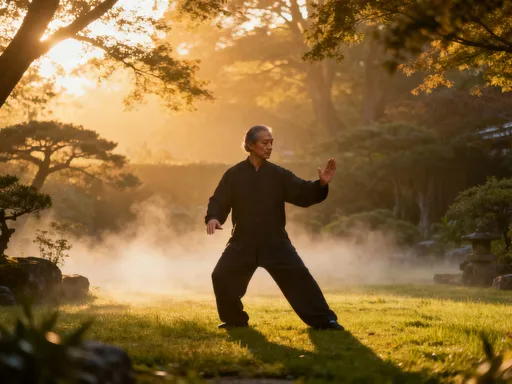
TCM also emphasizes the integration of daily habits to amplify treatment effects. Simple practices like eating warm, cooked meals instead of raw foods, maintaining regular sleep schedules, and incorporating gentle movement such as tai chi or qigong are often recommended. These lifestyle adjustments are not rigid rules but practical supports that align with the body’s natural rhythms. When combined with acupuncture and herbs, they create a reinforcing cycle of healing—each element enhancing the others.
Tracking Progress: Noticing the Subtle Shifts
One of the most important lessons in TCM-based recovery is learning to recognize small improvements. Unlike pharmaceutical interventions that may produce immediate but short-lived effects, TCM works gradually, like tuning an instrument until it plays in harmony. The first signs of progress are often subtle: sleeping through the night without waking, feeling less drained after a busy day, or noticing that digestion has become more regular. These changes may seem minor, but they reflect deeper shifts in the body’s internal environment.
Energy levels typically improve in stages. At first, a woman might notice she no longer needs an afternoon nap. Later, she may find she can manage household tasks without feeling overwhelmed. Over time, the quality of energy changes—from a forced, jittery alertness to a steady, grounded vitality. This kind of sustainable energy is a hallmark of true recovery, not just symptom masking. Patients often describe it as 'feeling like myself again,' not in a nostalgic way, but as a renewed sense of presence and capability.
Another indicator of progress is emotional resilience. As the body rebalances, many report feeling less reactive to daily stressors. Minor frustrations that once triggered anxiety or irritability now pass more easily. This is not due to suppression of emotions, but to a calmer nervous system and better-regulated qi flow. The connection between physical and emotional well-being becomes unmistakable. One patient described the change as 'upgrading the body’s software quietly in the background'—improvements that aren’t always visible but make everything run more smoothly.
Tracking progress also involves letting go of the expectation of quick fixes. TCM adjustment is not a sprint but a steady walk. Most practitioners recommend consistent care for at least eight to twelve weeks to see meaningful change. This requires patience and commitment, qualities that many women already possess from years of managing family and home. Framing recovery as a form of self-respect—rather than a chore—can help sustain motivation through the slower phases of healing.
Working With, Not Against: Combining TCM with Conventional Care
Integrative health—where TCM complements rather than replaces conventional medicine—is the most effective and safest approach. Women should never discontinue prescribed medications or treatments without consulting their healthcare provider. Instead, TCM can serve as a supportive layer, helping the body respond better to medical interventions and reducing side effects. For example, acupuncture has been shown to alleviate chemotherapy-induced nausea, and certain herbal formulas may support liver function during medication use—always under professional supervision.
Hospitals and rehabilitation centers around the world are increasingly incorporating TCM practices. In countries like China, Germany, and Canada, integrative oncology and post-surgical recovery programs often include acupuncture and herbal support. Even in the United States, institutions such as the Mayo Clinic and Cleveland Clinic offer acupuncture as part of pain management and wellness services. This growing acceptance reflects a shift toward patient-centered care that honors both scientific evidence and holistic wisdom.
Collaboration between practitioners is essential. A woman receiving TCM should inform her primary care provider, and ideally, both professionals communicate to ensure safety and coordination. Certain herbs can interact with medications, so transparency is crucial. A qualified TCM practitioner will always review medical history and current treatments before recommending any protocol. This cautious, informed approach ensures that TCM enhances, rather than complicates, the recovery process.
The goal is not to choose between systems, but to draw from the strengths of both. Conventional medicine excels in acute care, diagnostics, and life-saving interventions. TCM offers tools for restoration, prevention, and resilience. Together, they form a more complete picture of health—one that acknowledges both the immediacy of illness and the long arc of recovery.
Sustaining the Shift: Building a Life That Supports Natural Recovery
Lasting wellness is not achieved through a single treatment, but through consistent, mindful choices. TCM teaches that health is not a destination, but a dynamic process influenced by daily habits. Seasonal routines—such as eating warming foods in winter and lighter meals in summer—help the body adapt to environmental changes. Stress-aware habits, like taking short breaks to breathe deeply or stepping outside during daylight, support nervous system balance. These small acts accumulate into significant protection against burnout and relapse.
Body literacy—the ability to read and respond to physical signals—is another cornerstone of sustainable recovery. Women who learn to notice early signs of fatigue, tension, or imbalance can intervene before symptoms worsen. This might mean adjusting sleep schedules, pausing a project to rest, or scheduling a TCM tune-up at the first sign of sluggishness. Prevention becomes proactive, not reactive. Over time, this awareness fosters a deeper relationship with one’s body, built on respect rather than frustration.
Ultimately, choosing TCM adjustment is not about rejecting modern medicine, but about embracing a broader definition of care. It is an acknowledgment that recovery involves more than the absence of disease—it requires vitality, balance, and the capacity to thrive. For women navigating the complex demands of midlife, this approach offers not just relief, but renewal. Small, consistent adjustments—acupuncture sessions, herbal support, mindful eating—add up to lasting resilience. The journey is personal, gradual, and deeply empowering. And in the end, it is not about becoming someone new, but about returning, gently and steadily, to oneself.